Our
While
the rest of
the world spends its time in
Everyone has a vegetable and/or flower garden, sometimes in the long, narrow back yards, always in front if there is a house, many window boxes and balconies with plants. The little, local outdoor markets sell lettuce/vegetable/flower plants as well as produce.
Most folks do not have a car so markets are close, refrigerators are small, and most ride the public transport which is marvelous. The town is covered by 3 types. The yellow or blue electric trams run on rails and crisscross the city through the historic center square, Namesti Republiky. The electric trolleys cover the side streets, pushing their metal feelers up to grab the electric lines. The buses go further out to outlying villages. All cost the same to ride, 60 cents, or buy a month pass for $17 and ride forever. Most young folks stand, and anyone over 61 (retirement age) gets a seat if they will take it. During the day if you miss one tram, the next will be coming over the hill in 4 minutes, and in the evening, about every 9 minutes. Really, I only wish I had a car when I have to carry groceries home!
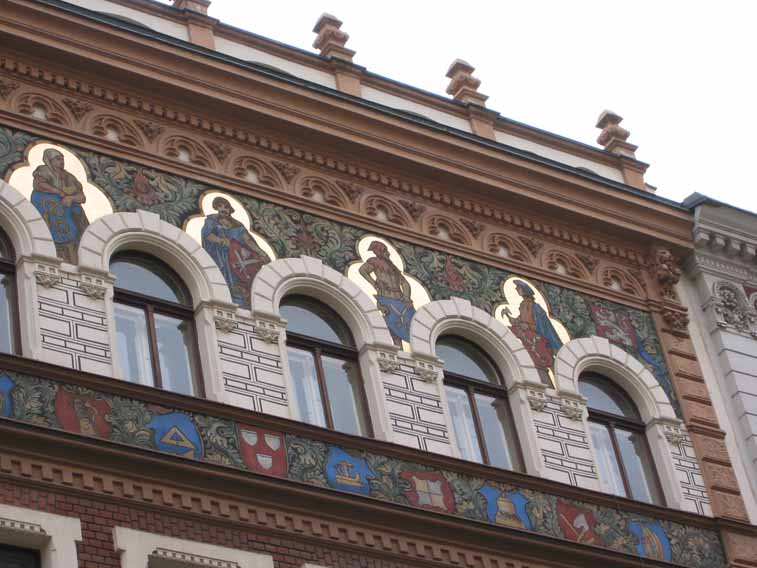
The following pictures highlight the amazingly varied architecture in the city.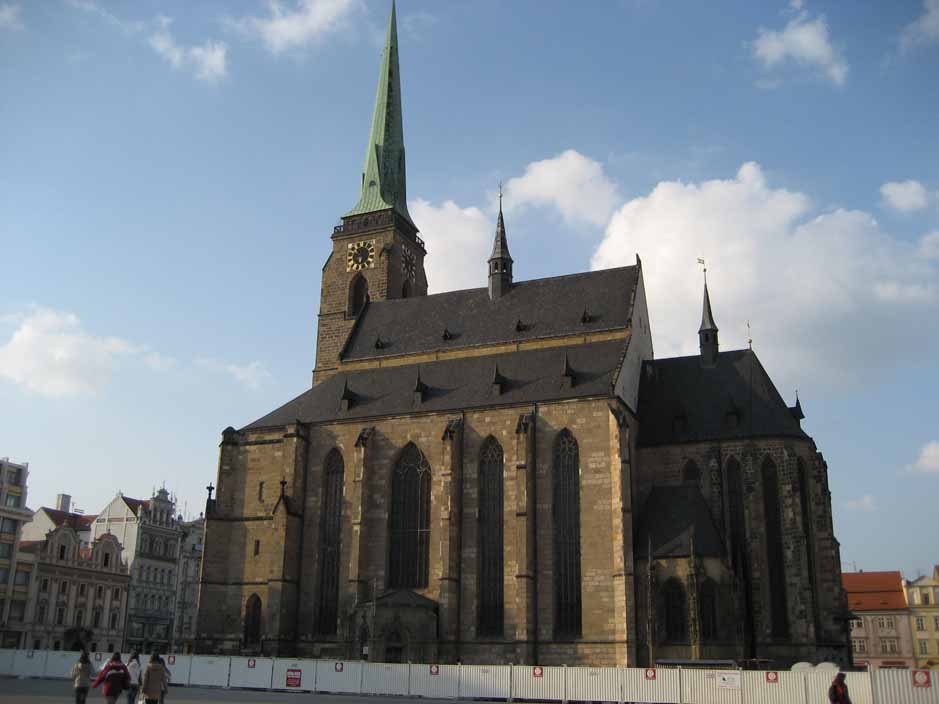
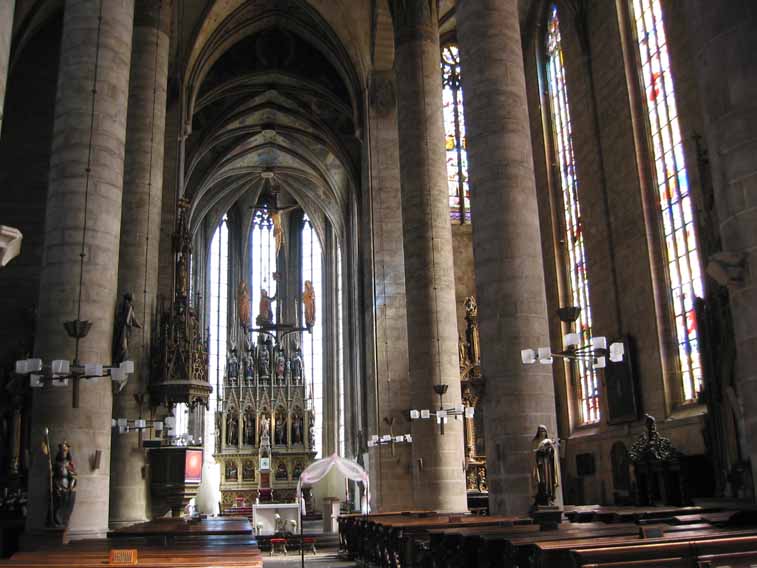
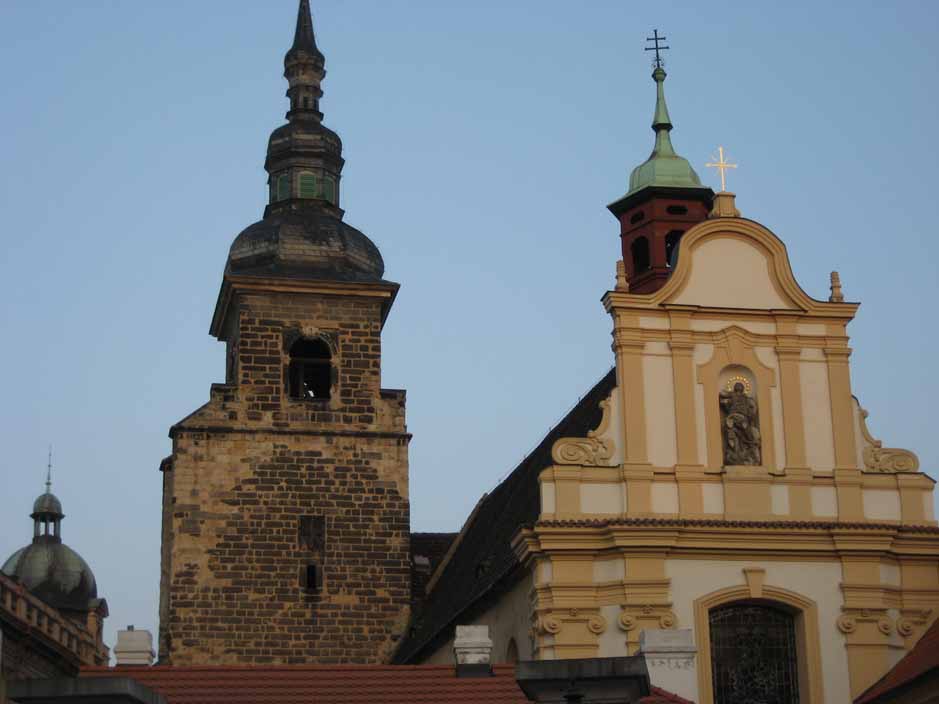
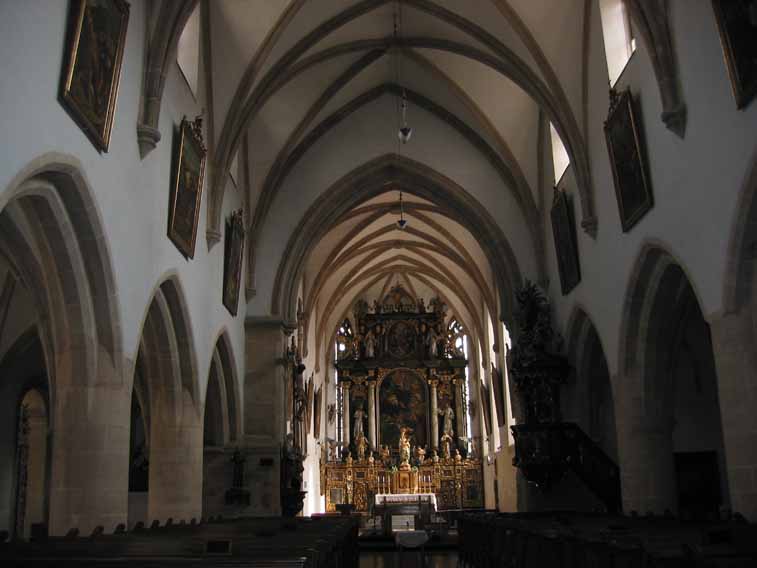
The first pictures are of the city center, always a square with a church. In this case it is called Namesti Republiky and the gothic Church St. Bartholomew, where I listened to Easter services sung in
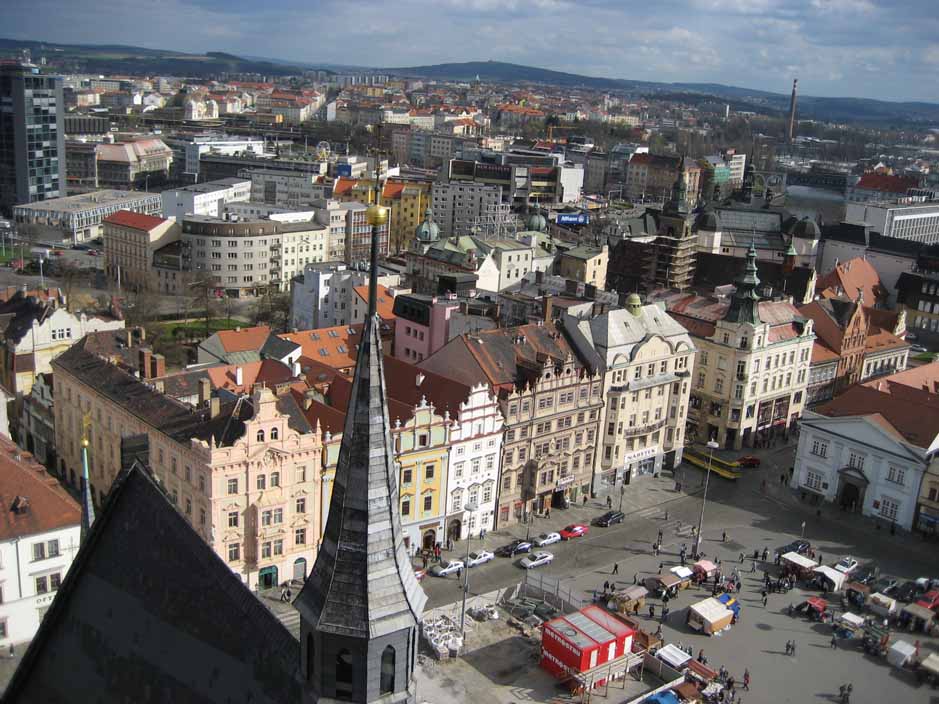
From the top of the church tower you can look out SW and see Radyne castle ruins in the far distance where we have hiked.
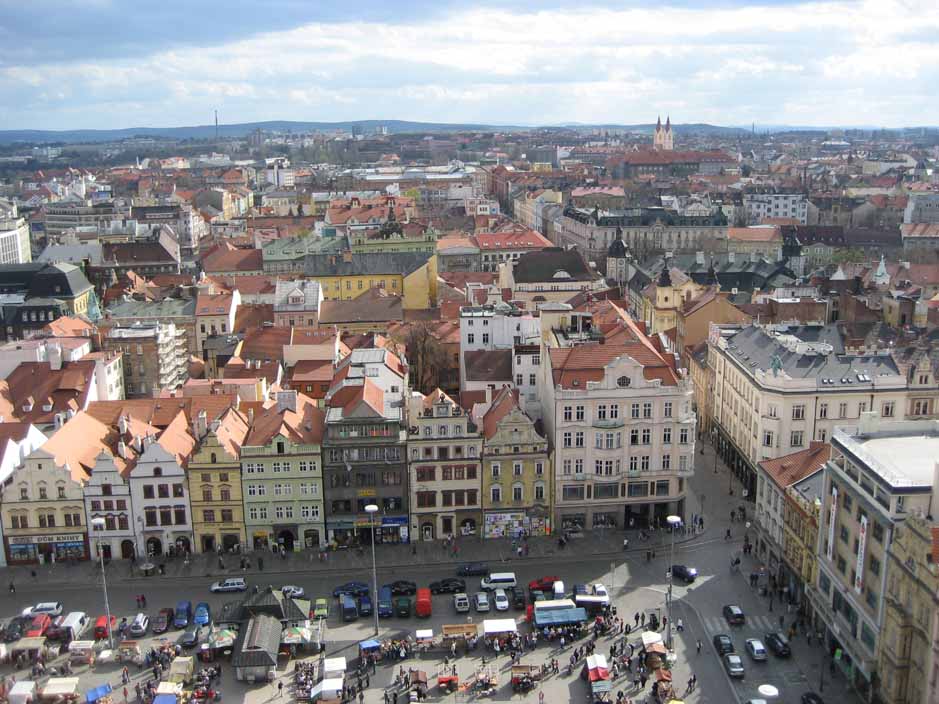
Looking south you see 2 tall church steeples --we see these from our windows a few blocks away.
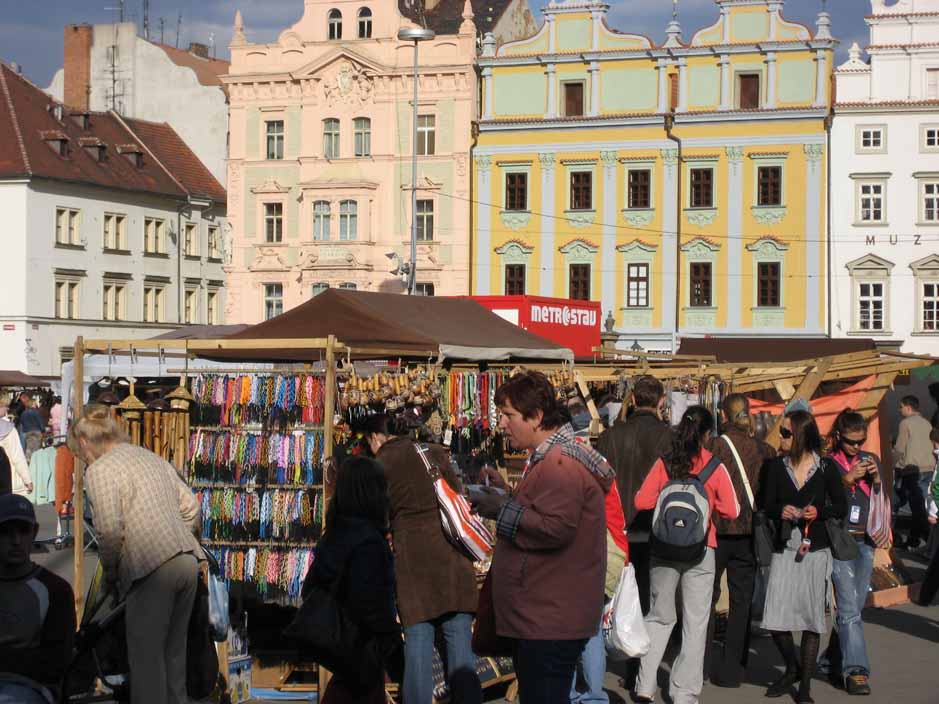
Easter market was happening on the square, selling breads, sweets, wooden products, and of course, pilsner beer, sausages & (sauerkraut).
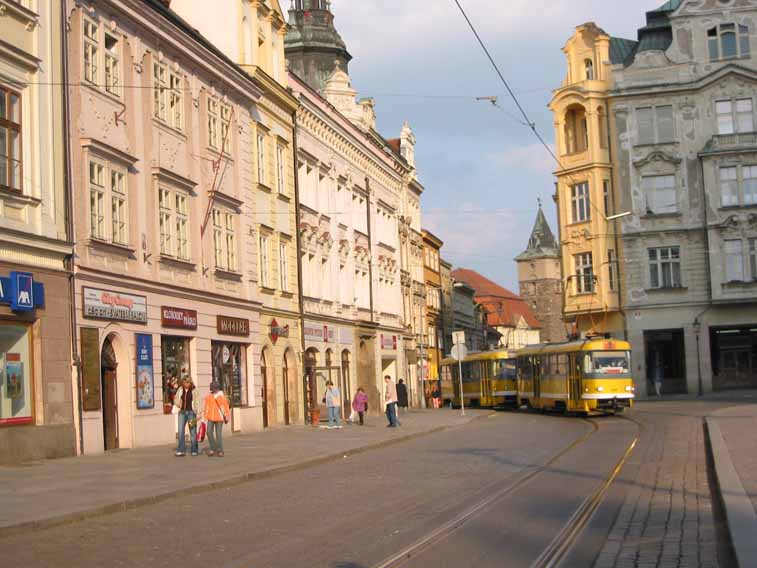
Yellow electric tram and original Water Tower in background.
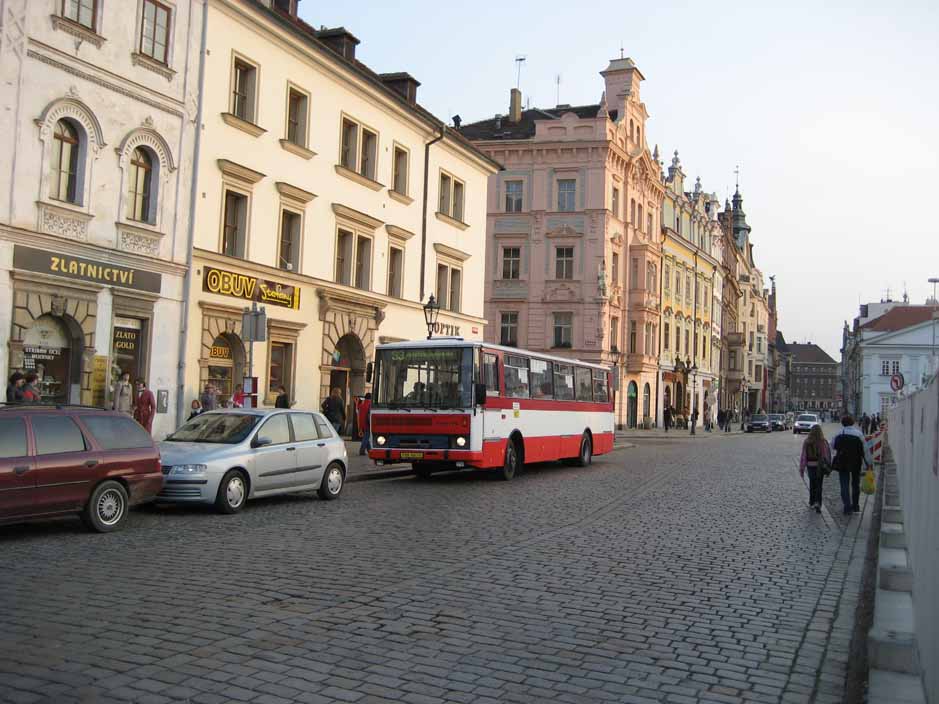
City bus (not the electric trolley kind, which is more common) on the stone paved streets around downtown.
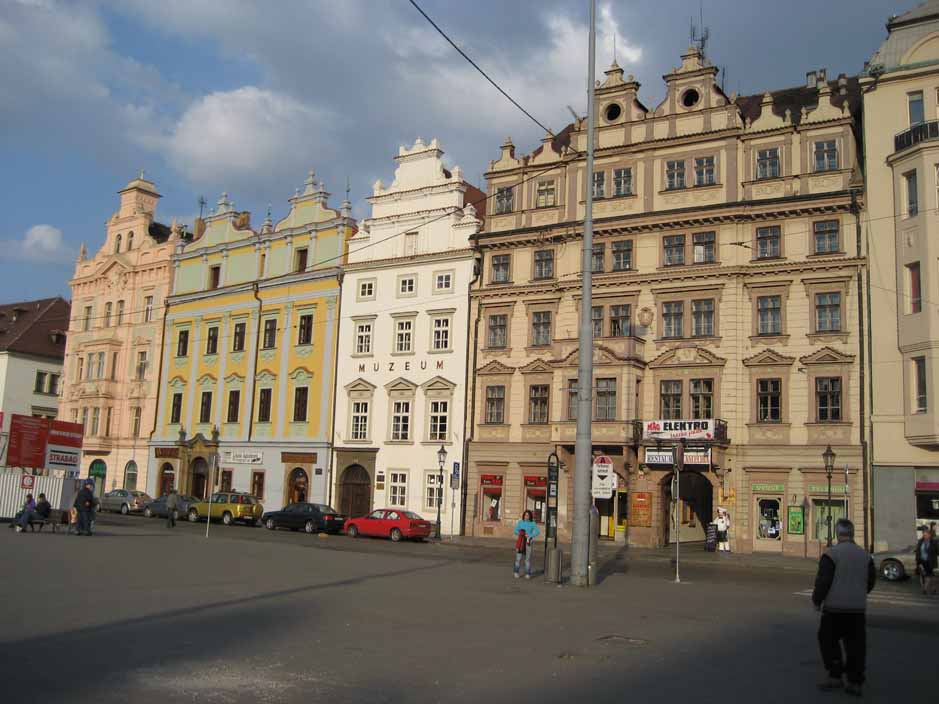
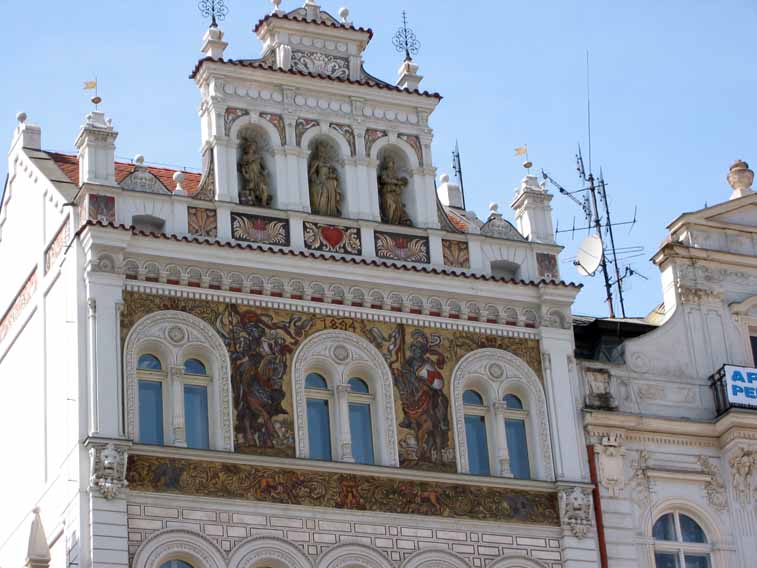
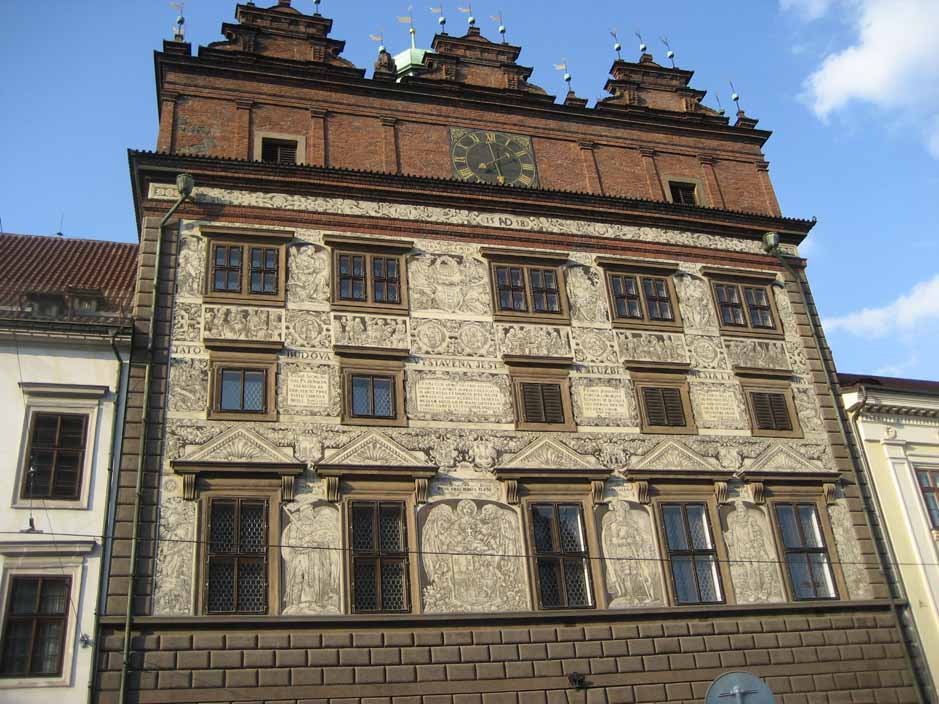
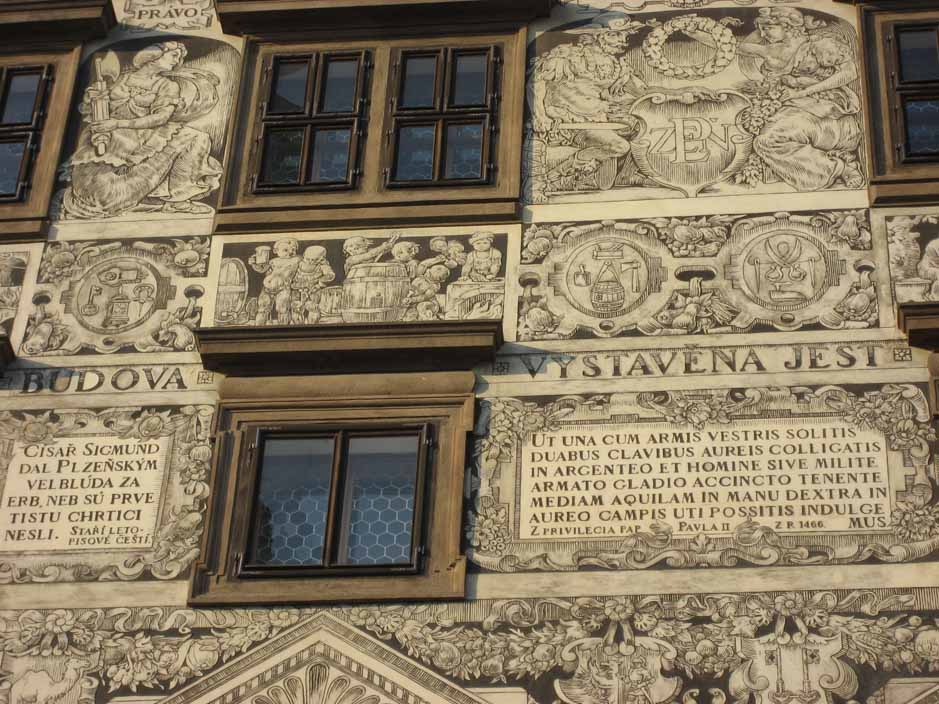
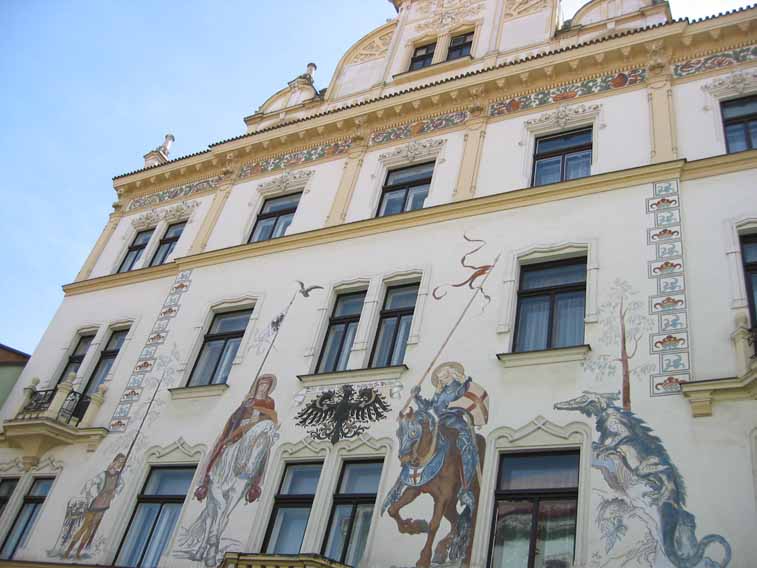
Radnice (old town hall) with 16th century sgraffito front (carve out stucco to see black underneath, to make a design, as I understand it).
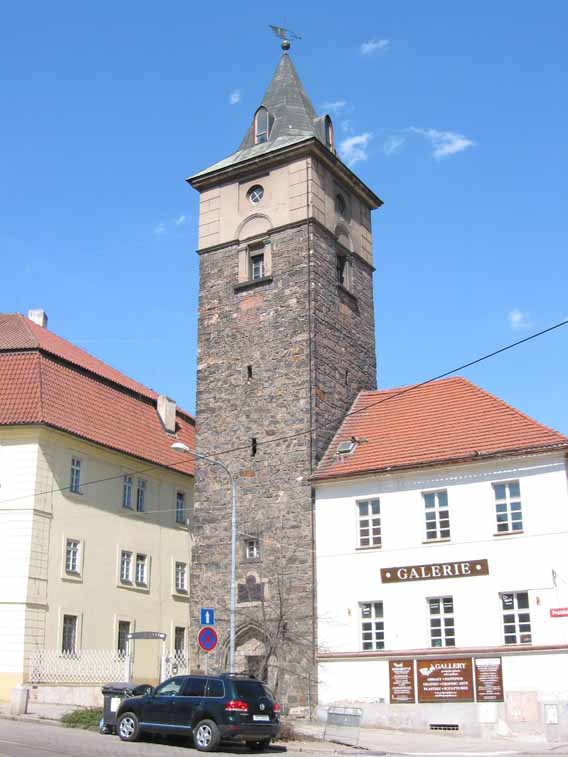
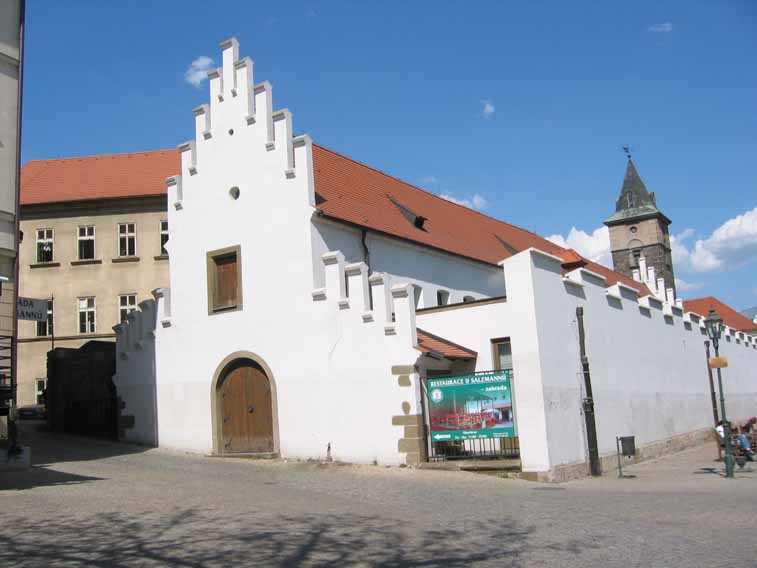
Old butcher’s stalls turned into art gallery.
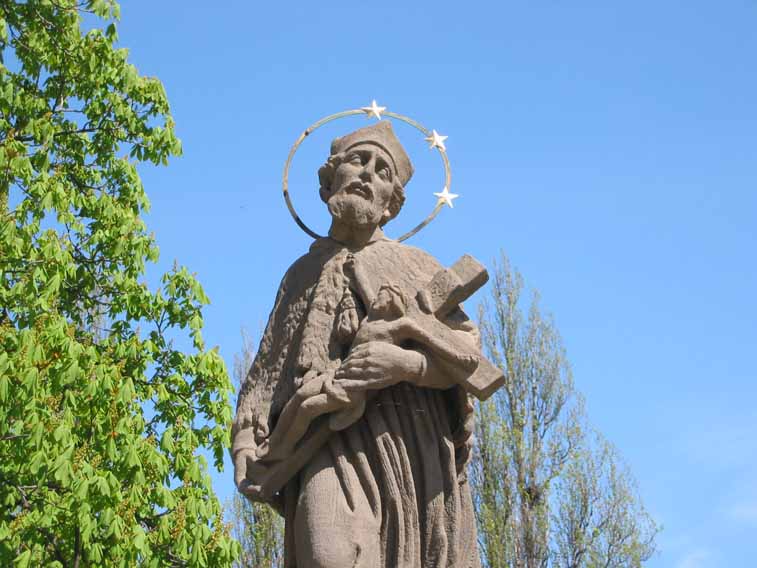
Statue St. John Nepomak, on every bridge in the country: Because he would not reveal what the queen had said in confession, the King had his tongue cut out and thrown in the river, but his body bobbed up with a halo of stars. Thus the bridge/water connection.
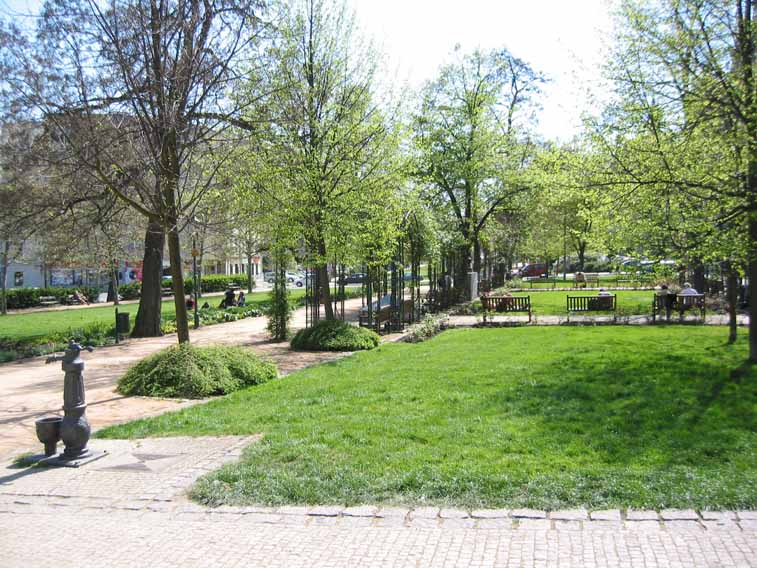 Ki
KiMore of Plzen center – sadys (parks) circle the downtown where the old town walls used to be -- all of this created since early 1990’s when the communist party became a "minority party", cheer, cheer.
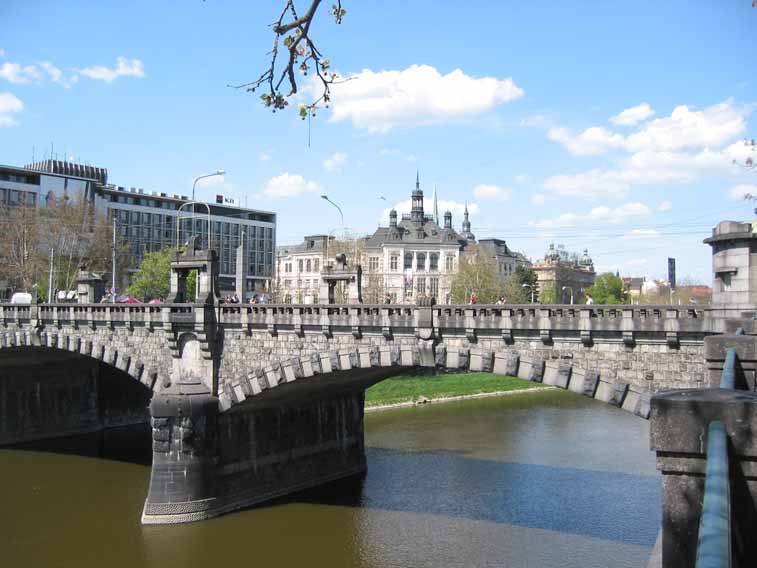
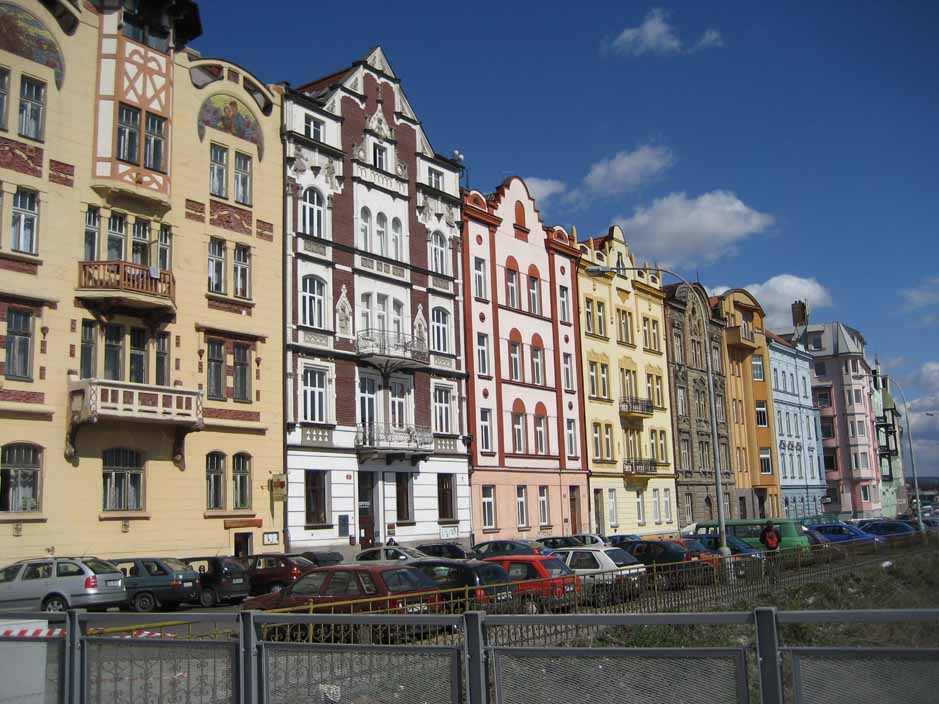
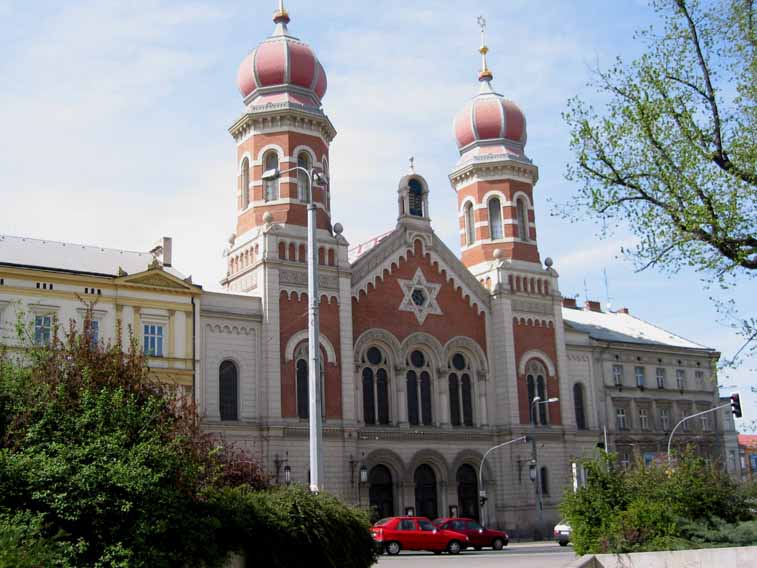
The neo-Renaissance Great Synagogue is the third largest in the world, built in 1892 by 3500 Jews, but sadly, few Jews remained after WWII.
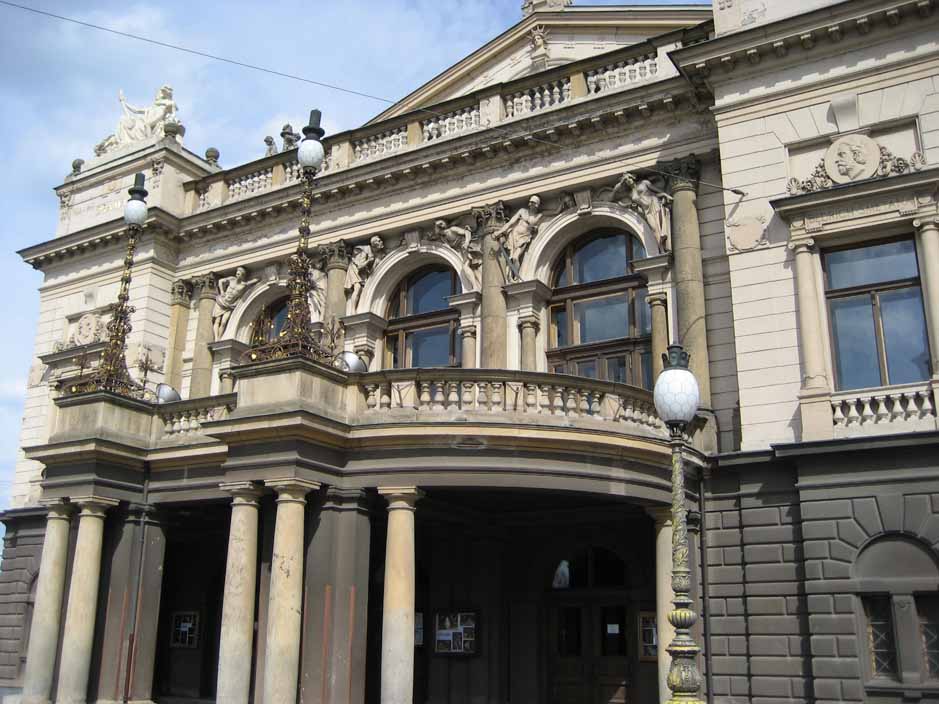
JK Tyla Theater hosts operas, ballets, while a smaller theater hosts the operettas, musicals, dramas. Here is the one place everyone dresses up, usually in black. (Have to buy a pair of black dress shoes).
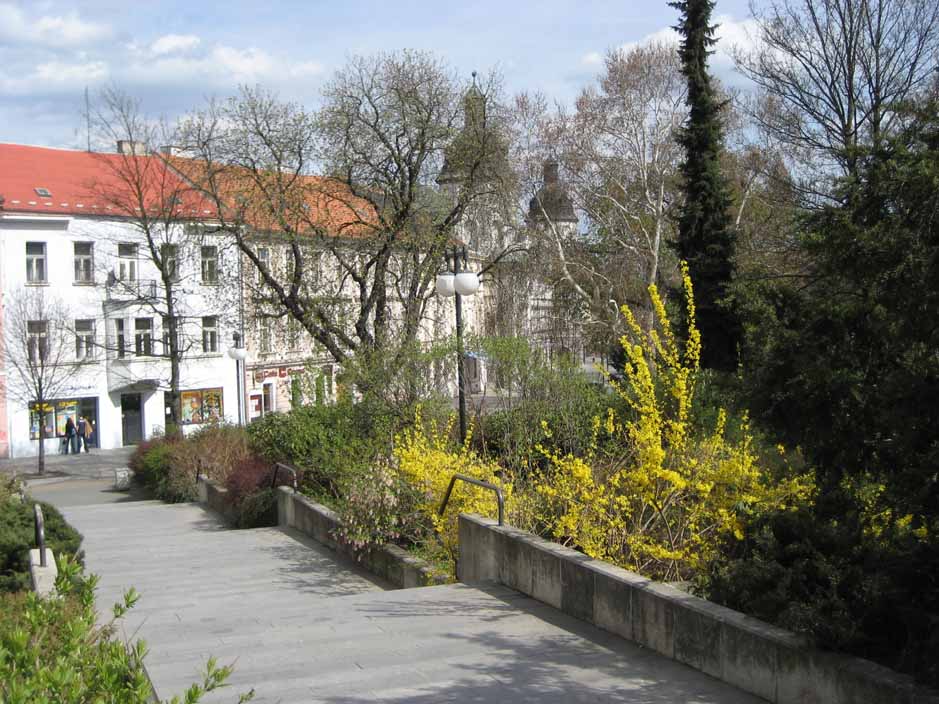
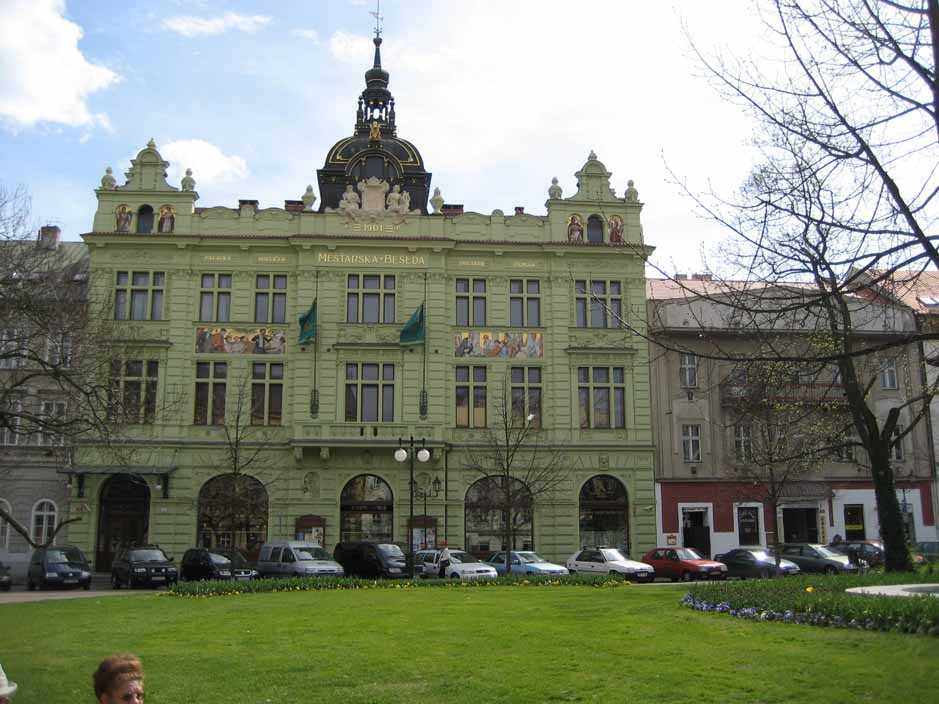
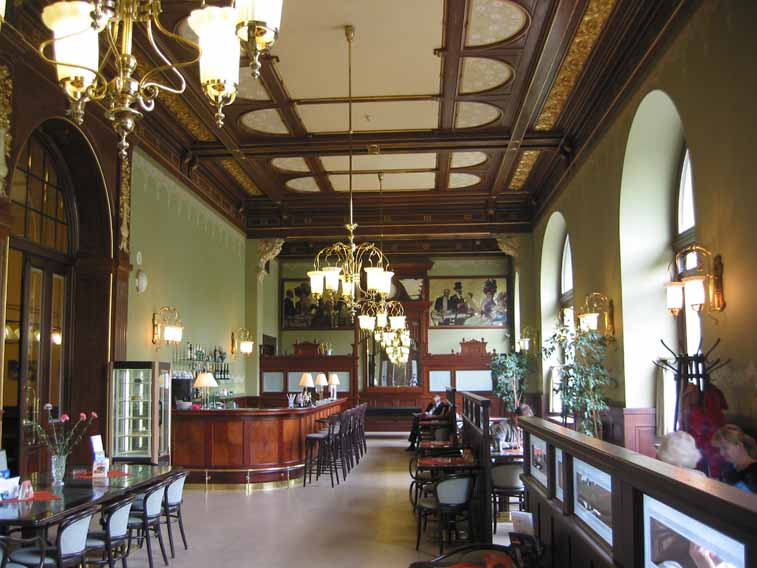
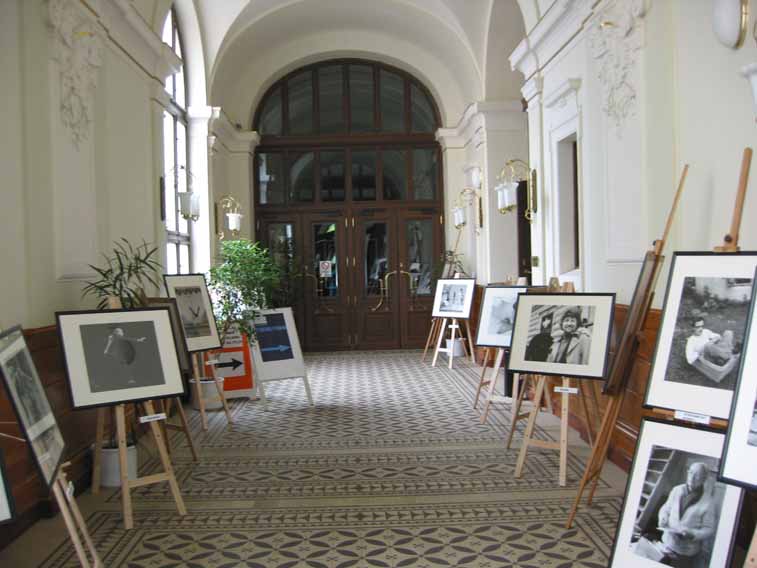
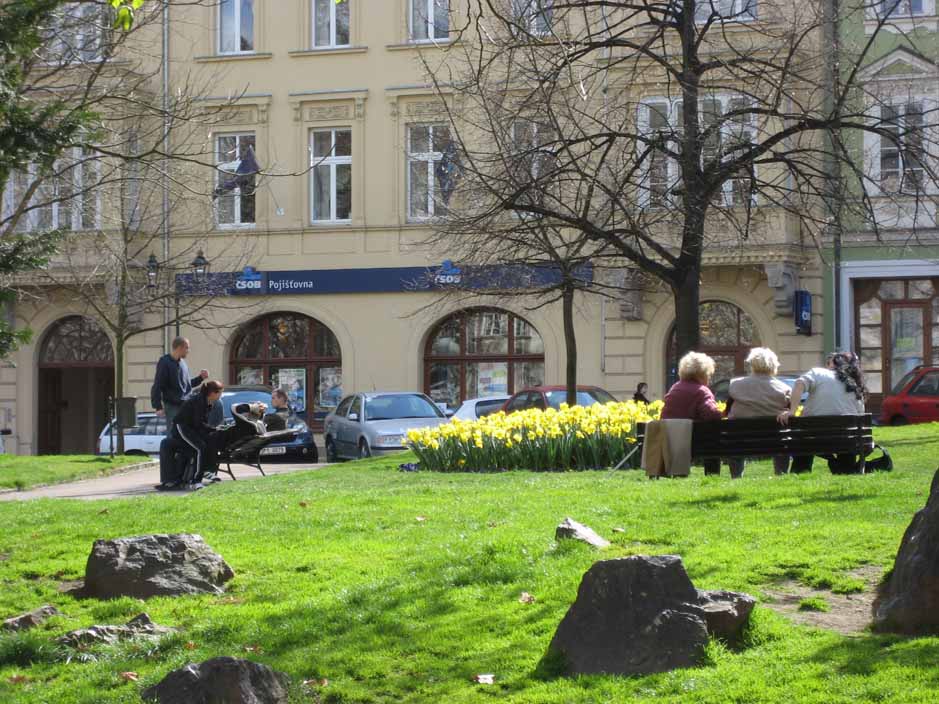
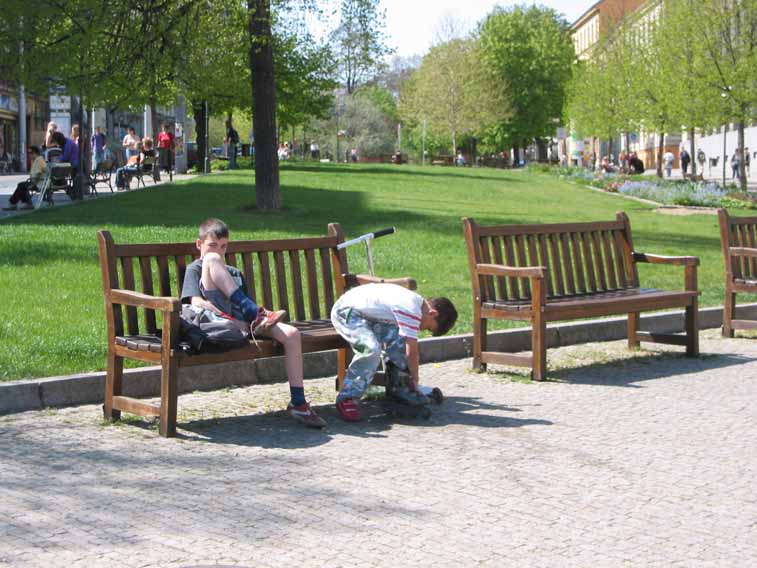
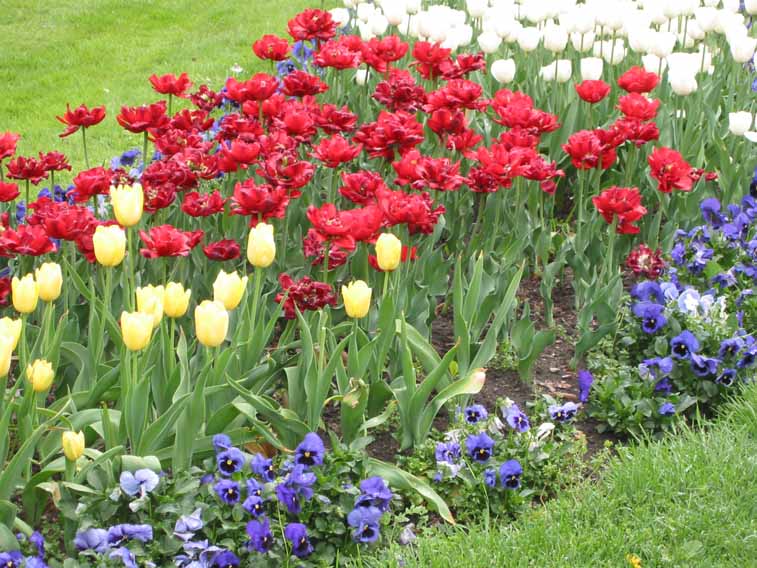
These last pictures represent my favorite places in town. I hang out at the green building, the Mestanska Beseda, buying tickets for music concerts or seeing English films, love the kavarna (coffee) cafe. It is a very elegant building fronted by lush, grassy lawns filled with flower beds. It is a lovely place to stroll into downtown, always live practice music coming out of the windows across the park, a very alive place to be, maybe not so good for rollerblading, but it is here too.
Plzen has so many music venues going on any one day. It supports culture bigtime.
More
pictures of home life and Lonnie in
next
issue.
Julie